
In a world where standing still means falling behind, we knew it was time for a bold transformation.
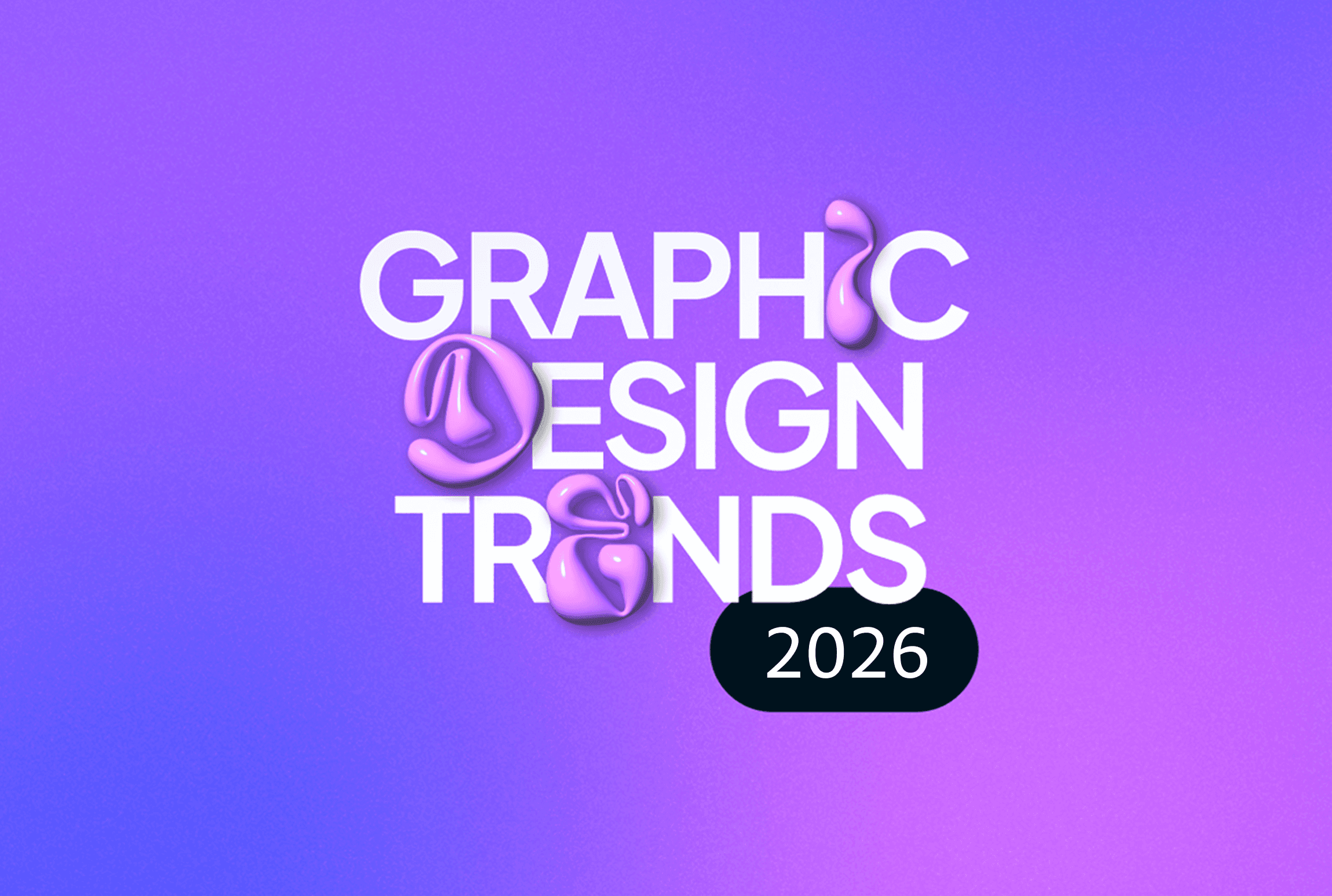
Top 10 Graphic Design Trends That Will Dominate 2026
Scroll to read
Stay updated with the latest insights, creative trends and studio highlights from Designfest. Here we share our journey, design trends updates and industry news to keep you inspired.
The world of graphic design moves at breakneck speed. As we look toward 2026, the landscape is shifting from the frantic "AI gold rush" of previous years toward a more grounded, intentional, and sophisticated era of visual storytelling. For designers, brands, and creative agencies in the United States, staying ahead of the curve isn't just about knowing what looks good it’s about understanding the cultural and technological shifts driving these aesthetics.
In 2026, design is no longer just about "making things pretty." It is about solving problems, evoking nostalgia in a high-tech world, and proving human authenticity in an age of automation. Whether you are a freelance creator in Brooklyn or a marketing executive for a Silicon Valley tech giant, these five trends will define how you communicate with your audience.
The Top 10 Dominant Graphic Design Trends for 2026
Whether you are a brand owner, a freelance creator, or a marketing professional, understanding these 10 core trends isn't just about "looking cool." It is about understanding how to capture attention in an era where the average attention span is measured in milliseconds. Let’s dive deep into the digital revolution.
1. AI-Assisted but Human-Led Design - The Era of the Augmented Creator
By 2026, the debate over whether AI will replace designers has largely been settled. In the US market, the answer is a resounding "no" but with a catch. AI has become the ultimate co-pilot. We have moved past the era of generic, "AI-looking" art and into an age where generative tools are used to augment, not dictate, the creative process.
The Shift from Automation to Curation
In the early days of generative AI, many brands experimented with purely AI-generated imagery. However, US consumers quickly grew tired of the "uncanny valley" effect visuals that felt slightly off or lacked emotional depth. In 2026, the trend is Human-Led AI. This means designers use AI to handle the heavy lifting: generating complex textures, iterating on 50 different layout versions in seconds, or creating custom brushes.
The true value of a designer in 2026 lies in their ability to curate and refine. A human eye is required to ensure that a design aligns with a brand’s specific "soul," ethical standards, and emotional goals. We are seeing a rise in "Prompt Engineering" as a standard design skill, where the designer acts more like a creative director, guiding the machine to produce something that feels uniquely human.
Why This Matters for US Brands
Speed and precision are the hallmarks of the American economy. AI-assisted design allows for:
Hyper-Personalization: Creating unique visuals for different target demographics at a fraction of the cost.
Rapid Prototyping: Moving from a concept to a high-fidelity mockup in hours instead of days.
Creative Freedom: By automating repetitive tasks like masking or color-correcting, designers can focus on the big-picture strategy.
2. Retro-Futurism - Nostalgia Meets Innovation
There is a unique phenomenon happening in American culture right now. While we are obsessed with the future (AI, space travel, EVs), we are equally gripped by a deep longing for the past. This has birthed the Retro-Futurism trend, which will reach its peak in 2026. This aesthetic blends the tech vibes of the 1980s and 90s—think neon grids, VHS glitches, and pixel art—with ultra-modern 3D rendering and sleek typography.
The "Newstalgia" Movement
Psychologically, nostalgia provides comfort during times of rapid change. For the US audience, which has weathered significant technological and social shifts, seeing "vintage" tech elements feels safe and familiar. Designers are leaning into "Synthwave" color palettes (vibrant purples, electric blues, and hot pinks) but applying them to high-end tech branding and app interfaces.
In 2026, you will see this trend manifesting through:
Y2K Aesthetics: The glossy, metallic, and bubble-gum tech vibes of the early 2000s are being reimagined for modern web design.
Cyberpunk Influence: Gritty, urban, neon-lit visuals that suggest a high-tech future but with a "lived-in" feel.
Analogue Textures on Digital Screens: Using film grain, dust textures, and light leaks to make digital designs feel like physical artifacts.
Applications in Gaming and Apparel
This trend is particularly dominant in the US gaming industry and streetwear fashion. Large brands are moving away from sterile, "corporate" looks and embracing bold, neon-infused identities that stand out in a crowded social media feed. It’s about creating a "vibe" that feels both cutting-edge and timeless.
3. Organic, Imperfect & Authentic Visuals - The Anti-AI Backlash
As digital perfection becomes the default, "perfection" itself is becoming boring. One of the most significant trends for 2026 is a move toward Organic and Imperfect Design. This is a direct response to the hyper-polished, often sterile nature of AI-generated content. American consumers, particularly Gen Z and Millennials, are craving authenticity. They want to see the "hand of the artist."
Embracing "Wabi-Sabi" in Design
The Japanese concept of Wabi-Sabi finding beauty in imperfection is a major influence here. In 2026, we see this through:
Hand-Drawn Typography: Custom-made lettering that isn't perfectly aligned.
Tactile Textures: Designs that look like they were printed on recycled paper, carved into wood, or painted on canvas.
Earth-Toned Palettes: A move away from artificial neons toward sage greens, terracotta oranges, and sandy beiges.
The Rise of the "Human Brand"
In the US, brands like Patagonia and various boutique coffee roasters have long used this aesthetic to signal "small-batch" quality and environmental consciousness. In 2026, even major tech companies are adopting "raw" visuals to appear more approachable and less like a faceless corporation. If it looks like a human made it, US consumers are more likely to trust it.
4. Bold Minimalism with Impact - Function Over Fluff
Minimalism is a staple of modern design, but in 2026, it is getting a major upgrade. We are moving away from "Quiet Minimalism" (which can sometimes feel empty) toward Bold Minimalism. This trend focuses on a very strong visual hierarchy, heavy-weight typography, and the "less is more" philosophy applied with extreme confidence.
Maximum Clarity, Minimum Distraction
In an era of information overload, the most valuable thing a design can provide is clarity. US audiences are constantly bombarded with notifications and ads. A design that uses white space effectively and gets straight to the point is seen as a luxury.
Key characteristics of Bold Minimalism in 2026 include:
Monochromatic Schemes with One Pop Color: Using a black-and-white layout with a single, high-contrast accent color to draw the eye.
Oversized Typography: When the words themselves are the "hero" image.
Intentional Navigation: For UI/UX, this means removing every unnecessary button or line to create a frictionless experience.
Accessibility and ADA Compliance
In the US, accessibility is no longer optional—it's a legal and ethical requirement. Bold minimalism naturally lends itself to high-contrast designs that are easy for everyone to read, including those with visual impairments. This "Universal Design" approach ensures that brands can reach the widest possible audience while maintaining a high-end, sophisticated look.
5. 3D & Immersive Graphics - The Spatial Design Era
With the wider adoption of Spatial Computing (think Apple Vision Pro and Meta Quest) in the US, graphic design is moving out of the flat 2D plane and into the third dimension. 3D visuals will be mainstream by 2026, integrated into everything from standard websites to social media ads.
From Flat to "Feelable"
Designers are now using 3D elements to add a sense of weight and realism to digital spaces. This isn't just about 3D characters; it’s about 3D Typography that looks like it's made of glass or liquid, and Depth Effects that make a mobile screen feel like a window into a larger world.
Glassmorphism and Claymorphism: These styles use transparency and soft, clay-like shadows to create a sense of touch and depth.
Interactive 3D: Websites in 2026 often feature objects that users can rotate or interact with, turning a passive viewing experience into an active, immersive one.
AR Integration: More US brands are using QR codes that launch AR (Augmented Reality) experiences, allowing customers to see a 3D version of a product in their own living room.
Why It Matters for Storytelling
3D design allows for much more complex storytelling. It engages the viewer’s brain in a way that flat images cannot. For US tech and lifestyle brands, 3D graphics are the ultimate tool for demonstrating how a product works in "real life," bridging the gap between the digital and physical worlds.
6. Expressive Typography - When Words Become the Visual Identity
For a long time, typography was treated as a secondary element something meant to be read, but not necessarily "seen." The rule of thumb was clarity and legibility above all else. However, as noted by Datum Creative Media, we are entering an era where typography is the identity. It is no longer just decoration; it is the brand’s voice, personality, and soul.
The Shift from Static to Kinetic
One of the most exciting developments in this space is Kinetic Typography. Static text is becoming a thing of the past in digital environments. Whether it’s on a landing page, a social media reel, or a digital billboard in Times Square, text is now expected to move, stretch, and react.
Kinetic typography allows brands to convey emotion that static words cannot. A "bouncy" font can feel playful and energetic, while a "melting" font can evoke a sense of fluidity or psychedelia. This motion captures the viewer's attention and keeps them engaged longer than a traditional headline.
The Rise of Variable Fonts
Technologically, the rise of Variable Fonts has changed the game. Previously, if a designer wanted to use different weights of a font (like Thin, Bold, and Extra Bold), they had to load separate files for each, which could slow down website performance.
Variable fonts are a single file that contains the entire "DNA" of a font family. This allows for seamless transitions between weights and widths. In 2025, we see these fonts adapting to context shrinking to fit small mobile screens or expanding to fill massive desktop monitors, all while maintaining perfect aesthetic harmony.
Type as the Central Element
We are seeing more brands move away from traditional logos and toward "typographic logos." In these cases, the brand doesn't need a symbol (like an apple or a swoosh). The way the name is written using custom, expressive lettering becomes the iconic mark. This trend prioritizes unique brand voices, ensuring that a company’s message is unmistakable even before the first sentence is read.
7. Hyper-Contrast Color Blocking and Bold Palettes
If the 2010s were defined by muted pastels and "Millennial Pink," 2025 is defined by Hyper-Contrast. Color is being used as a strategic tool to guide the visual flow and create instant drama. According to experts at Datum Creative Media, these high-impact palettes are particularly dominant in digital advertising, where you have less than a second to stop a user from scrolling.
Commanding Attention with Contrast
The goal of color blocking is to create "visual friction." By placing two colors that sit opposite each other on the color wheel or using a bright neon against a deep, dark base designers can force the eye to focus on specific information. This isn't just about aesthetics; it’s about psychology and navigation.
Popular Palette Combinations for 2025:
Cobalt Blue vs. Ochre: This pairing feels both modern and sophisticated. The electric energy of the blue is grounded by the earthy, golden tones of the ochre.
Deep Greens with Neon Coral: This mix taps into a "digital nature" vibe, combining organic, forest-like tones with high-tech, fluorescent accents.
Earthy Tones with Bright Accents: We are seeing a lot of "Terracotta" and "Sage" paired with "Electric Violet" or "Safety Orange."
The "Drama" of Digital Ads
On platforms like Instagram, TikTok, and LinkedIn, bold color palettes serve a functional purpose. They help define the "Brand Personality" immediately. A brand using high-contrast colors signals that it is confident, innovative, and unafraid to take risks. For US-based startups looking to disrupt traditional industries, these bold palettes are becoming the go-to choice for social media campaigns and app interfaces.
8. 3D Mixed Media and Layered Dimensions
The line between the digital world and the physical world is blurring. We are no longer satisfied with "flat" design. Instead, we are seeing a massive surge in 3D Mixed Media. As highlighted by Datum Creative Media, this trend involves layering 2D illustrations, 3D objects, high-resolution photography, and rich textures into a single composition.
Multi-Sensory Visual Storytelling
The human brain is wired to perceive depth. By adding shadows, 3D volume, and overlapping elements, designers can create a "multi-sensory" experience. Even though the screen is flat, the design feels like something you could reach out and touch.
This is particularly effective in Interactive Experience Design. Imagine a website where, as you scroll, 3D elements rotate or move through different "layers" of the page. This creates a sense of "Multi-layer Storytelling," where the background, middle ground, and foreground all contribute to the narrative.
Textures and Tangibility
A key part of this trend is the use of Hyper-Realistic Textures. Designers are incorporating elements like grain, paper ripples, metallic glints, and fabric weaves. By mixing these "real-world" textures with digital 3D shapes, brands can feel more grounded and authentic. It moves away from the "plastic" look of early 2000s CGI and toward something that feels premium and curated.
9. Sustainable and Eco-Conscious Design Narratives
Sustainability is no longer a "buzzword" or a corporate checkbox; it has become a fundamental design language. As consumers—especially younger generations in the US—become more environmentally conscious, they are looking for brands that reflect those values visually. Digital Regenesys points out that this trend is about more than just using the color green; it’s about an entire "eco-conscious narrative."
Earthy Palettes and Recycled Textures
The visual cues for sustainability have evolved. We are seeing a move toward "unprocessed" aesthetics. This includes:
Raw Textures: Designs that mimic the look of recycled paper, cardboard, or organic linen.
Earthy Palettes: Using muted, natural tones like sand, charcoal, clay, and olive.
Minimalist Ink Usage: In packaging design, there is a trend toward using less ink and simpler printing processes to reduce environmental impact, which creates a clean, "honest" look.
Beyond the Package - Storytelling
Eco-conscious design is also showing up in digital brand storytelling. Brands are using "Eco-friendly Symbolism" not just the recycling logo, but imagery that highlights biodiversity, clean energy, and circular economies. This visual language helps build trust. When a customer sees a brand using these "honest" design elements, they perceive the brand as being more transparent and socially responsible.
This is a critical trend for any brand in the consumer-packaged goods (CPG) space. In 2025, if your packaging looks overly synthetic or wasteful, you risk alienating a massive segment of the US market that prioritizes environmental responsibility.
10. Synthetic Nostalgia and Emotional Design
Perhaps the most fascinating trend is Synthetic Nostalgia. This is a term used by Zeka Design to describe a hybrid style that feels both familiar and futuristic. It’s the feeling of a memory that never quite happened—a blend of retro aesthetics and modern technology.
Why We Crave Nostalgia
In times of rapid technological change (like the current AI boom), humans naturally retreat toward things that feel familiar. Nostalgia provides comfort. However, "Synthetic Nostalgia" doesn't just copy the past; it distorts it. It uses modern tools to recreate the "glitches" and "imperfections" of older media.
Examples of this style include:
Glitch Art: Embracing the "errors" of the digital age to create a punk-rock, rebellious vibe.
Distorted Photography: Using filters or techniques that make photos look like they were taken on a 1990s film camera or a 1970s Polaroid, but with modern high-definition clarity.
The "Future Medieval" Aesthetic: A strange but growing trend that combines medieval imagery (knights, heraldry, gothic fonts) with futuristic, chrome, and neon elements.
The Rise of "Punk Revival" and Hybrid Styles
We are seeing a resurgence of the "Punk" aesthetic hand-drawn scribbles, cut-and-paste collage styles, and intentionally "messy" layouts. This is a direct reaction to how "perfect" and "sterile" AI-generated images can sometimes look. By introducing "human error" and "retro distortion," designers can create a deeper emotional connection with the audience. It feels authentic, raw, and real.
What These Trends Mean for the USA Market
The US market is unique because it is a global trendsetter that values both high-tech efficiency and deep-rooted individualism. As a designer or brand manager, here is how to navigate these 2026 trends effectively:
1. The Demand for Hybrid Skills
The "pure" graphic designer is a thing of the past. To succeed in the US market in 2026, you need to be a Hybrid Creative. This means having a solid foundation in traditional design principles (color theory, typography) while being proficient in AI tools and motion design.
2. Brand Identity is the New Currency
Because AI can generate "decent" designs for anyone, a brand’s unique identity is more important than ever. US consumers are looking for brands that have a "point of view." Whether your brand is "Eco-Conscious Organic" or "High-Tech Retro-Future," you must pick a lane and be consistent.
3. Sustainability as an Aesthetic
In the US, "Green-design" isn't just about using recycled paper; it’s a visual language. Using earthy tones, minimalist layouts (which use less digital energy/ink), and imagery that celebrates nature is a powerful way to signal a brand’s values to a socially conscious American audience.
How to Apply These Trends - A Quick Guide for 2026
If you want to stay relevant, start implementing these strategies today:
Don't Fear AI, Master It: Spend time learning how to "talk" to AI tools. Use them for brainstorming and generating assets, but always finish the work with your own unique human touch.
Experiment with Motion and 3D: Even a subtle 3D shadow or a small bit of motion can make a static brand feel "alive" and modern.
Focus on Typography: In 2026, fonts are the new photos. Invest in custom typography or bold, variable fonts that can adapt to different screens and moods.
Keep it Real: Don't be afraid of a little "mess." A hand-drawn line or a slightly grainy texture can go a long way in making your brand feel authentic and trustworthy.
The Future belongs to the "Mindful Designer"
As we move toward 2026, the most successful designs will be those that strike a balance between the power of technology and the warmth of the human spirit. Whether you are leaning into the neon-soaked grids of Retro-Futurism or the clean, high-impact world of Bold Minimalism, the goal remains the same: to connect with your audience on a meaningful level.
The "Land of Water" (Canada) and the high-tech hubs of the USA are seeing a convergence of these styles. Design is becoming more global, yet more personal. By embracing these trends, you aren't just following a fad you are participating in a global conversation about what it means to be visual, creative, and human in the mid-2020s.